
Warnings were ignored and the papers went missing. That is how the infected-blood disaster ran
Official files and the Infected Blood Inquiry's work on lost documents show years of warnings about imported Factor VIII, a delayed switch to safer product, and papers that were later destroyed or could not be found.
Published
Watch the TEA ROOM NEWS episode
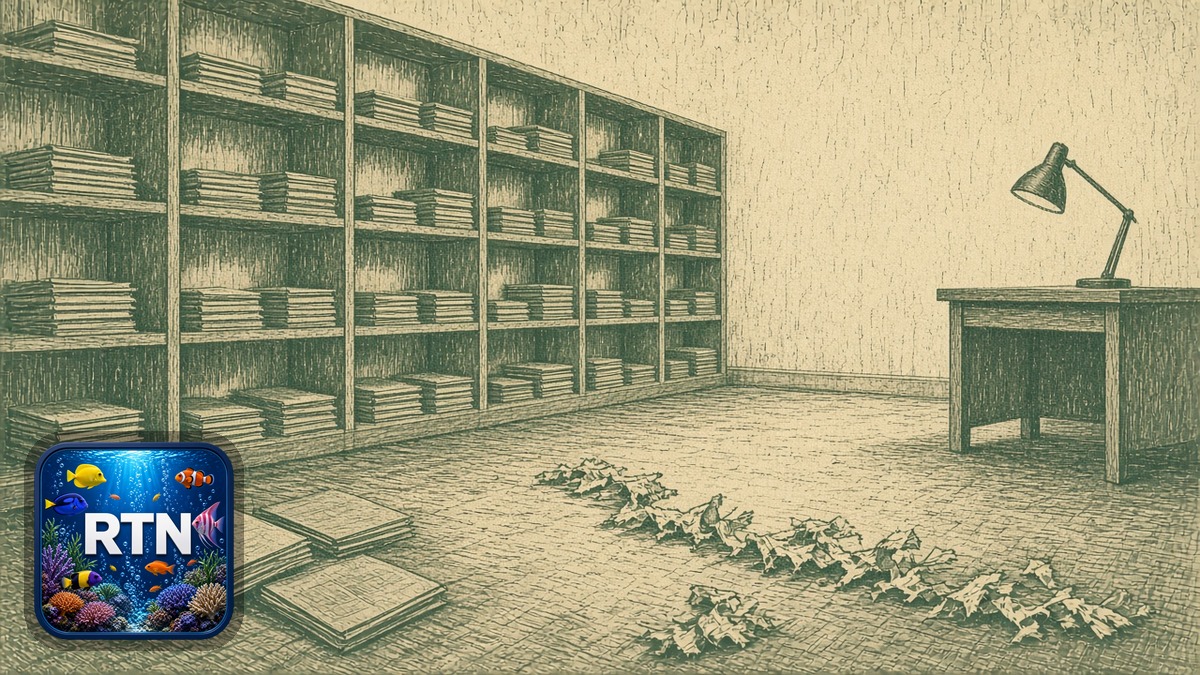
The Infected Blood Inquiry’s documentary record shows years of warnings about imported Factor VIII, a delayed switch to safer product, and official papers that later went missing or were destroyed, the Inquiry’s work and Tony Adams’s research pack set out.
The infected-blood disaster is sometimes talked about as if it were a single accident that nobody could have seen coming. The documentary record assembled for the Infected Blood Inquiry, and reviewed in Tony Adams’s research pack, shows something else: warnings in the 1970s and early 1980s, a Britain that kept buying American Factor VIII made from paid donors, including prisoners, and official papers that later went missing or were destroyed.
Britain imported the American product because it was not self-sufficient in Factor VIII, the Inquiry’s account of the sourcing, and earlier ministerial promises of self-sufficiency cited in the dossier, show. The American concentrate was made from large pools of plasma. A 1983 British embassy briefing put a pool at up to 22,000 donors, that briefing as cited in the research pack states; other official descriptions speak of pools running into the tens of thousands. Paid donors, including prisoners, were part of that supply, the Inquiry and earlier official warnings record. The risk was not a secret locked in a single laboratory. It was in the diplomatic and medical paperwork of the time.
Warnings about hepatitis, and then about AIDS, reached government and the health service in those years, the Inquiry’s timeline of decisions, summarised in the dossier, records. The move to heat-treated product, which reduced the viral risk, was delayed beyond what campaigners and later the Inquiry judged reasonable, that same official chronology shows. Langstaff’s final report of 20 May 2024 found the disaster “largely, though not entirely” avoidable, the report, as quoted in Al Jazeera’s account that day, states. “Avoidable” is not a word that sits easily with “bad luck.” It is a finding about choices.
The paper trail of those choices is itself part of the scandal. Inquiry Volume 7, on missing documents, deals with HIV litigation files, records of the Advisory Committee on the Virological Safety of Blood, and Lord Owen’s Private Office papers, the Inquiry’s own published work on that volume sets out. A 2000 internal audit found hepatitis C advisory-committee files destroyed by an “arbitrary and unjustified decision,” that audit as reported by the Inquiry and cited in the dossier states. In June 2018 the Department of Health apologised for claiming that all documents up to 1995 were available, official and news accounts of that apology, cited in the pack, record. Lost papers are not a clerical subplot. They are how a cover-up, in Langstaff’s later phrase, can be “more subtle, more pervasive and more chilling” than a single plot, the 2024 report, as quoted in Al Jazeera’s 20 May 2024 coverage, found.
John Major sits in this paper trail as a decision-maker, not only as the author of an infamous phrase. In November 1987, as Chief Secretary to the Treasury, he wrote that a sympathetic response to compensation carried “very real dangers,” including an open-ended precedent and the risk of court action “because of the implication of negligence,” the letter as read at the Inquiry on 27 June 2022 and reported that day states. In December 1990, weeks into his premiership, he signed off an out-of-court settlement of the HIV haemophilia litigation, the Inquiry chronology and his written statement WITN5284001 record. The Haemophilia Society, when that settlement was announced on 11 December 1990, praised the fact of a deal and called it “unfortunate the settlement has been so low,” the Inquiry chronology states. He later refused a separate hepatitis C scheme, and he told the Inquiry he would decide the same way again, the 2022 evidence as summarised in the research pack records. His morning remark that what had happened was “incredibly bad luck,” on the official transcript of 27 June 2022, is dealt with at length in the companion piece on that hearing. It belongs here only as the language he reached for when the file of decisions was already long.
The “JM” letter sometimes attributed to Major, and sometimes to Health Secretary John Moore, is unresolved in the public sources the pack reviewed; both readings remain in play if that document is discussed. What is not in dispute is the broader pattern the Inquiry later named: harm that was largely avoidable, truth that was hidden, and papers that were not there when they were asked for. Warnings ignored and files destroyed are not the same as fate. They are a method, and the official record now says so.
Sources
- Infected Blood Inquiry final report, 20 May 2024, including Volume 7 as cited in the research pack, Source as cited. Accessed 18 November 2026.
- Al Jazeera, 20 May 2024, Source as cited. Accessed 18 November 2026.
- Infected Blood Inquiry, Major transcript, 27 June 2022, INQY1000219, Source as cited. Accessed 18 November 2026.
- Tony Adams, Tea Room News research dossiers, scripts and source lists, 18 November 2026, Tony Adams research pack. Accessed 18 November 2026.
Sources link to external sites. Their content is the responsibility of their publishers.
More in Investigations
InvestigationsExplainer
From Vietnam to a British loft: the route that ends in a locked grow house
InvestigationsExplainer
Locked lofts: how Vietnamese workers are trafficked onto Britain’s cannabis farms
InvestigationsOpinion