
Opinion: Legalise to liberate — regulation will not end every crime, but it can cut the farm-slave profit
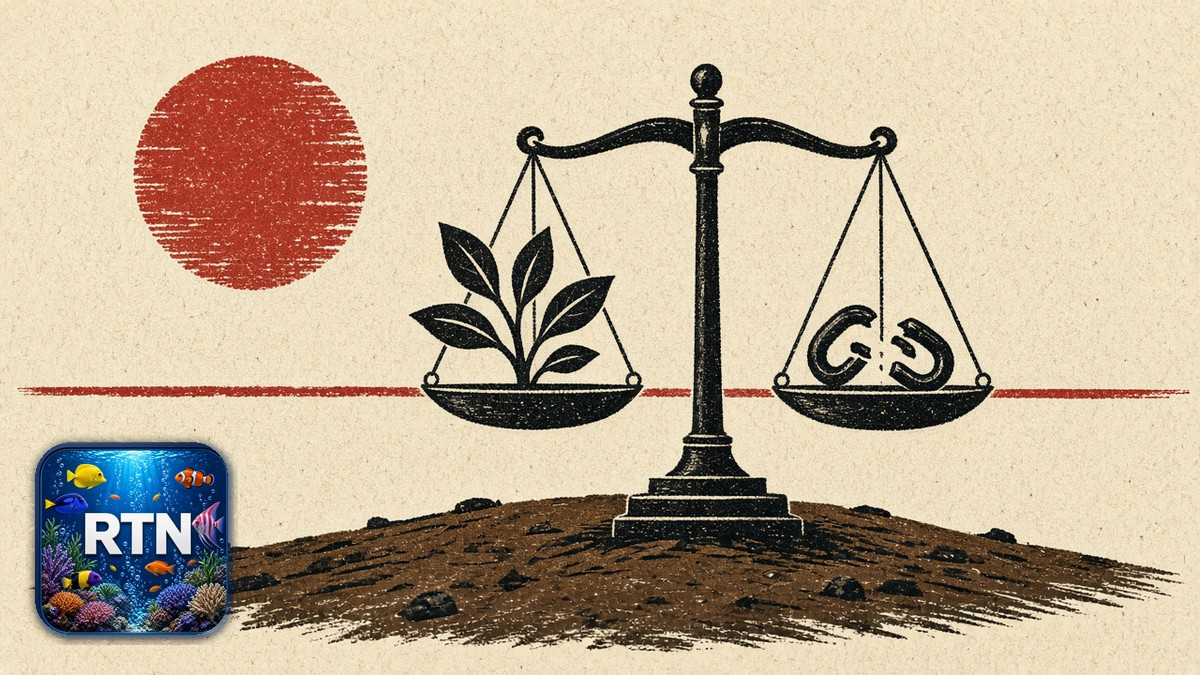
This is an opinion. Prohibition has left a high-profit cannabis market staffed, in documented cases, by trafficked Vietnamese workers. A licensed adult market is not a miracle cure. It is the clearest way to shrink the black-market prize that pays for the locks on those loft doors.
Published
This is an opinion.
Britain already knows what happens when a product is illegal, widely used, and valuable. Organised crime supplies it. The people at the bottom of that supply chain are the ones who get locked in. In July 2025 the Crown Prosecution Service described, in a concluded case, how Vietnamese workers were forced to grow cannabis to repay debts from Vietnam and from the journey, under threats to themselves and their families. That is not a theory about markets. It is a court result.
The question is what to do next. Raids will continue to find farms. Some organisers will be convicted. That work matters. It has not stopped the model. The Home Office’s own National Referral Mechanism figures show Vietnamese nationals were the third most commonly referred nationality for modern slavery in both 2024 and 2025, including hundreds of children. The public statistics do not isolate a single official cannabis-farm total, but the court record and years of charity reporting leave little doubt that cultivation is one of the destinations.
Transform Drug Policy Foundation has long argued that prohibition itself places the drug market in the hands of organised crime and makes the exploitation of vulnerable people a tool of that trade. In a 2020 briefing it calculated that 1,853 potential victims were referred to the NRM in 2019 in connection with forced cannabis cultivation or county lines supply — a combined figure, and not a Vietnamese-only one — amounting to over 17 per cent of that year’s referrals, with more than 60 per cent of those drug-trade referrals being children. The Liberal Democrats have made the same core argument in party policy: introduce a legal, licensed adult market, restrict sales to over-18s, and use licensing and potency limits to take trade away from criminal gangs.
The other side of the argument deserves a fair hearing. The UK Government’s position is plain. On 17 March 2025, answering a written question, the Home Office minister Dame Diana Johnson said: “This Government has no plans to legalise cannabis.” Cannabis remains a Class B drug under the Misuse of Drugs Act 1971, with serious penalties for possession, supply and production. Ministers and other critics say legalisation would send the wrong message, could increase use, and could add to mental-health harms, especially for young people and in a market already dominated by strong products. Those concerns are not frivolous. Any honest campaign has to take them seriously.
International evidence does not give either side a clean win. Canada legalised and regulated adult-use cannabis under the Cannabis Act on 17 October 2018. Health Canada’s Canadian Cannabis Survey found that, in 2024, 72 per cent of people who had used cannabis in the past 12 months usually bought it from a legal storefront or website, up from 4 per cent in 2018, while only 3 per cent said they usually bought from an illegal source, down from 28 per cent. Past-year use rose from 22 per cent in 2018 to 26 per cent in 2024, and was unchanged from 2023. That is a real shift toward legal supply. It is not the disappearance of an illicit market, and it is not proof that use stays flat. Germany’s Cannabis Act, which came into force on 1 April 2024, is narrower still: adults may possess limited amounts, grow at home, and, later in 2024, join cultivation associations. It did not create licensed commercial shops. Nobody should cite Germany as if it were a full commercial market.
There is a further caution, and it cuts against lazy slogans. Nail bars are legal, and Vietnamese workers have still been trafficked into them. The Guardian, reporting after the Essex lorry deaths, described girls and young women being sent to nail bars and boys to cannabis farms, both trapped by debt. Legalisation of a trade does not, by itself, abolish exploitation. Anyone who claims it would is overselling.
So why change the law on cannabis at all? Because the farm model is built on a black-market premium. When the only large-scale suppliers are criminals, they need labour that can be hidden, moved and threatened. A licensed system with labour inspections, identity checks, tax, product testing and a ban on forced labour would not empty every loft overnight. It would make that particular profit less worth the risk. Enforcement could then concentrate on traffickers and on violence, instead of treating the person found under the lights as the prize arrest.
That has to be paired with protection, not used as an excuse to skip it. Section 45 of the Modern Slavery Act 2015 already provides a defence for many victims forced into cultivation. CPS guidance says they should not be charged where the defence is clearly made out. The European Court of Human Rights, in V.C.L. and A.N. v. the United Kingdom in 2021, found that the UK failed two Vietnamese minors who were prosecuted anyway. Non-prosecution of trafficked victims, proper National Referral Mechanism support, and an end to pushing people back into the hands of the same networks are not “soft”. They are the minimum if the policy is serious about slavery rather than about plant counts.
I do not argue that every drug law should be torn up, or that children should be anywhere near this market. I argue that continuing a ban, while expressing shock each time a raid finds a locked gardener, is a choice to leave the economic engine running. Regulate adult cannabis. Protect the people already trapped. Go after the organisers. That is the campaign. The slogan is simple: free the farm slaves.
Sources
- Six people jailed for modern slavery and drugs crimes, Crown Prosecution Service. Accessed 22 November 2026.
- Reforming drug policies to reduce the trafficking and exploitation of vulnerable people, Transform Drug Policy Foundation. Accessed 22 November 2026.
- A regulated cannabis market, Liberal Democrats. Accessed 22 November 2026.
- Cannabis: Health Services, UIN 37287, UK Parliament / Home Office. Accessed 22 November 2026.
- Key findings: Cannabis use in Canada (2024), Health Canada. Accessed 22 November 2026.
- Canadian Cannabis Survey 2024: Summary, Health Canada. Accessed 22 November 2026.
- Frequently asked questions on the Cannabis Act, German Federal Ministry of Health. Accessed 22 November 2026.
- Germany: New Cannabis Act Enters into Force, Library of Congress. Accessed 22 November 2026.
- Trafficked Vietnamese and the lure of UK nail bars and cannabis farms, The Guardian. Accessed 22 November 2026.
- Modern slavery: National Referral Mechanism and Duty to Notify statistics UK, end of year summary 2024, Home Office. Accessed 22 November 2026.
- Modern Slavery and human trafficking: offences and defences, including the section 45 defence, Crown Prosecution Service. Accessed 22 November 2026.
- V.C.L. and A.N. v. the United Kingdom, European Court of Human Rights. Accessed 22 November 2026.
Sources link to external sites. Their content is the responsibility of their publishers.
More in Investigations
InvestigationsExplainer
From Vietnam to a British loft: the route that ends in a locked grow house
InvestigationsExplainer
Locked lofts: how Vietnamese workers are trafficked onto Britain’s cannabis farms
InvestigationsAnalysis