
Nixon's May 1971 remarks are on tape, not film — and they came before Watergate, not after
The official record of Richard Nixon's 13 May 1971 Oval Office remarks is audio from Conversation 498-5. The White House taping system did not film these conversations. The remarks were made more than a year before the Watergate break-in.
Published
Watch the TEA ROOM NEWS episode
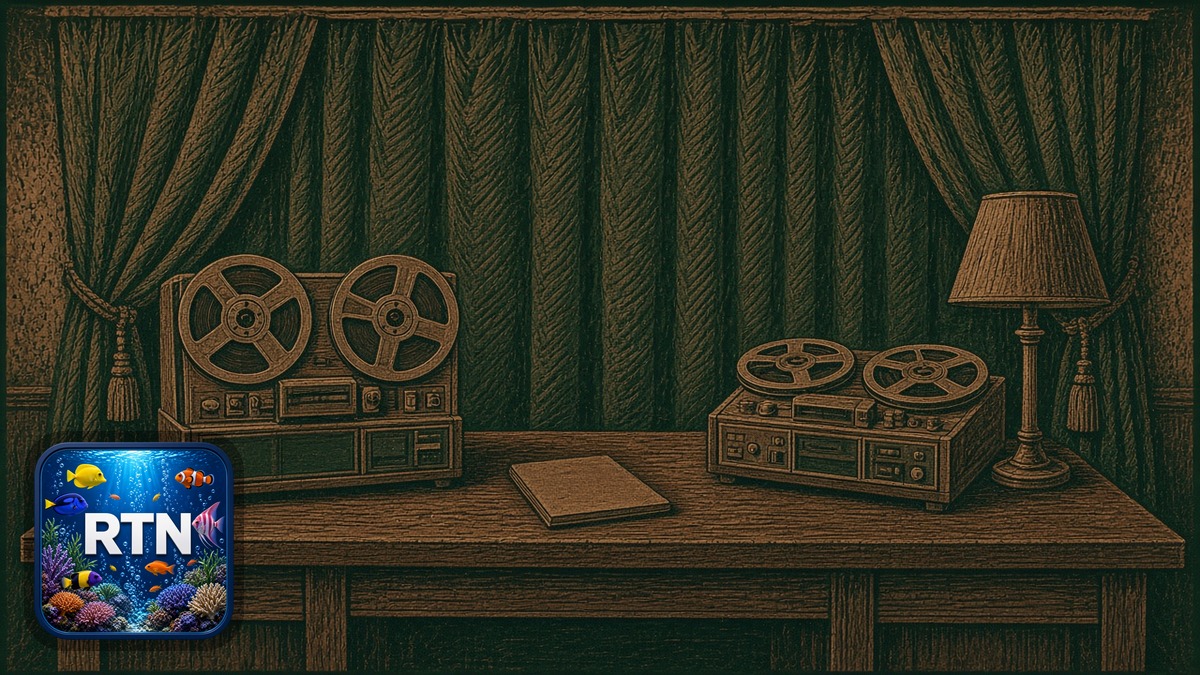
Richard Nixon’s remarks about gay people in the Oval Office are not a rumour, and they are not a secret film. They are on an official audio tape. On 13 May 1971, in Conversation 498-5, the president spoke with John Ehrlichman and H.R. Haldeman, the Nixon Library and the University of Virginia’s Miller Center, which hold and present the conversation, record. The White House taping system recorded about 3,700 hours of sound, not pictures, between 16 February 1971 and 18 July 1973, the Library’s description of the system states. The system’s existence became public in July 1973. These particular passages were published much later: in print around 2000, and as audio in 2013, the publication history set out in Tony Adams’s research pack, citing the Library, The Advocate and later reporting, records.
The date matters, because the remarks are still casually placed “after Watergate,” as if they were the bitter aside of a collapsing presidency. They were not. The Watergate break-in was in June 1972, the established chronology of that burglary shows. Conversation 498-5 is more than a year earlier, the tape log itself states. Hostility in the official record does not need a later scandal to explain it, and misdating the tape is a way of softening the fact that this was the sitting president, in ordinary conversation, before the crisis that later defined him.
What he said should be taken from opened transcripts or from named published reports, not from memory. ABC News, The Advocate, and later work by Douglas Brinkley and Luke Nichter in Vanity Fair and in published transcript editions, as cited in the dossier, have reported the exchange. Where published transcripts disagree on a particular line — including a handshake remark rendered as “won’t,” “can’t,” or “don’t even want to” — the audio is the authority, the pack correctly notes. The remarks were crude, and they were about homosexuality as a social contagion and a political problem, those published accounts of the tape describe. They were not a slip of a private diary. They were captured by a system the president had had installed in his own office.
One geographical correction also belongs here, because it has been repeatedly got wrong. Nixon’s comments about San Francisco were about the city’s upper class and the Bohemian Grove, not about the Castro, the research pack’s reading of the tape and of later commentary states. Putting the Castro into that sentence is a later overlay. It is not what the official record of the conversation supports.
A further claim has to be kept in a still tighter register. Tony Adams has said he has seen footage of Nixon making these remarks. That is Tony’s account, and it is unverified. The research pack’s correction is the one that should govern publication: the official system recorded audio only, and no Oval Office film of these conversations has been produced. The Nixon Library has stated that the White House tapes are in the public domain, as cited in the pack, which is an invitation to listen, not a licence to invent a camera that was not there.
The official record, heard in that way, is already an indictment in the president’s own voice, on a date that precedes Watergate, on a medium that is sound and not pictures. Anyone who needs a secret film to make the remarks more real is asking for a worse story than the one the National Archives already holds. The tape is the document. The date is 13 May 1971. The pictures do not exist, and they do not have to.
The taping system itself is part of that official story, and it cuts against the film claim in a second way. It was a sound-activated network of microphones, documented by the National Archives and the Nixon Library, those institutions’ descriptions of the system state, and it ran until mid-July 1973. When the system became public that month, the political shock was that conversations had been recorded at all. Nobody in the official account of that disclosure produced a corresponding set of Oval Office films of these exchanges, the pack’s review of the record finds. Fifty years later, the claim of footage still has to arrive as an unverified personal account, or not at all.
The wider federal context is also dated, and it too precedes Watergate. Executive Order 10450, issued in 1953, had already treated “sexual perversion” as a loyalty-and-security problem for federal employees, the text of that order and later historical work cited in the dossier record. Nixon’s 1971 remarks sit in that climate. They do not require a post-break-in psychology, and they are not made more official by being moved in the calendar. The historically serious version is the one with the correct date, the correct medium, and the president’s own recorded words, checked against the audio where transcripts diverge.
Sources
- Nixon Library / Miller Center, Conversation 498-5, 13 May 1971 (via research pack), Source as cited. Accessed 18 November 2026.
- Tony Adams research dossier: Out and Proud, Nixon tapes section, Source as cited. Accessed 18 November 2026.
- Tony Adams, Tea Room News research dossiers, scripts and source lists, 18 November 2026, Tony Adams research pack. Accessed 18 November 2026.
Sources link to external sites. Their content is the responsibility of their publishers.
More in Untold World
Untold WorldAnalysis
The 165 million India deaths claim: what the research says, and where it is contested
Untold WorldAnalysis
The Gay Liberation Front did not ask for a welcome. It forced a public presence in two countries
Untold WorldAnalysis