
Blood Cannabis: How Prohibition Keeps Vietnamese Gardeners Enslaved in Britain
After 39 Vietnamese people were found dead in a lorry in Essex in 2019, this piece argues cannabis prohibition still leaves gardeners enslaved in Britain.
Published
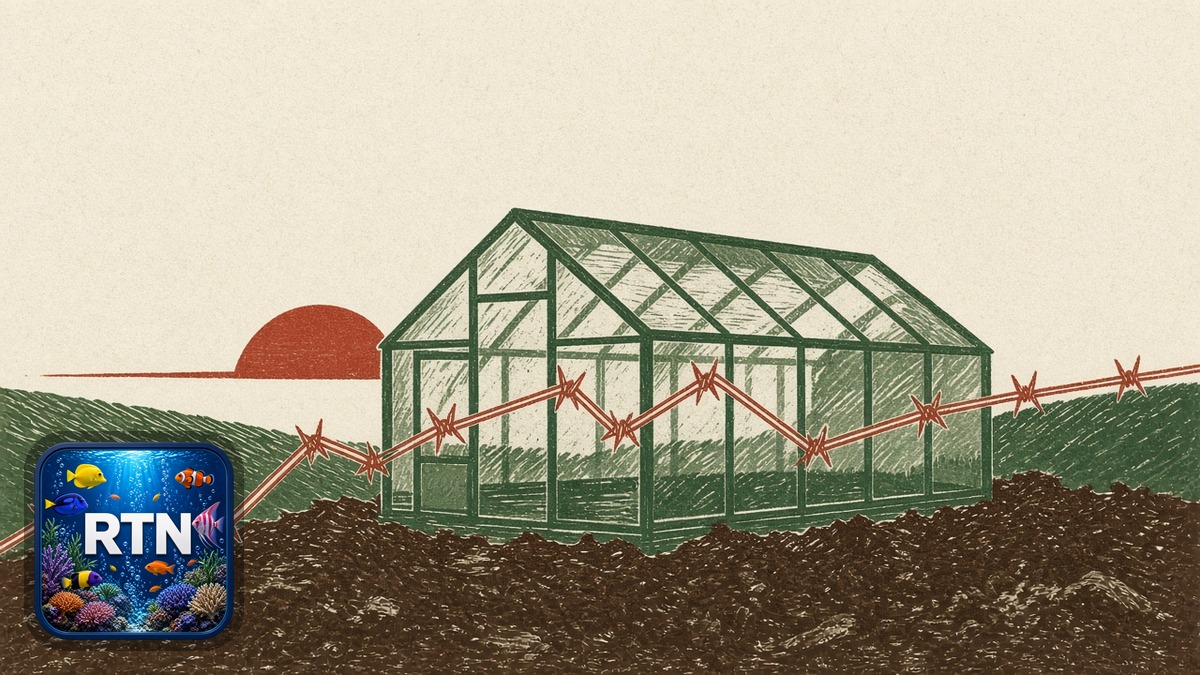
In October 2019, 39 Vietnamese men, women and children were found dead in the back of a refrigerated container lorry in Grays, Essex. They had paid smugglers for a chance at a better life. Instead they suffocated. That single image — a sealed metal box that became a mass grave — remains one of the clearest symbols of the human cost of irregular migration routes into the United Kingdom.
What is less often said is that the same networks that put those 39 people in that container continue to deliver young Vietnamese men into locked cannabis farms across Britain, including in Wales. The plants inside those farms are carefully tended. The people who tend them are treated as disposable.
This is not an exaggeration. Police, the National Crime Agency and the courts have repeatedly documented the pattern. Vulnerable people, many of them already in debt in Vietnam, are moved into the UK and placed in residential houses, industrial units, former sports centres and other buildings that have been stripped and converted into grow sites. Windows are blacked out. Doors are locked or controlled. Food is delivered. Instructions arrive by phone. Escape is difficult. Violence is used when the crop fails or when someone tries to leave. The value of the plants routinely exceeds the value placed on the lives of the people forced to look after them.
Wales has featured in these cases for years. Raids have uncovered large-scale operations in disused sports centres, warehouses and ordinary-looking properties. The same pattern appears across the Midlands, the North and the South East. Vietnamese nationals have long been disproportionately represented among those found working these sites under conditions of debt bondage and modern slavery. Albanian and other nationalities have also been identified in more recent operations. The common factor is organised crime’s need for cheap, controllable labour that can be moved, threatened and discarded.
The official response has largely treated the people found inside the farms as offenders first and victims second. Many have been arrested for production offences. Some have later been recognised as trafficking victims through the National Referral Mechanism. Others have been deported. The organisers and the profit model remain. New farms appear. New people arrive.
This is the predictable result of prohibition. When a commodity is illegal yet in high demand, the market does not disappear. It moves underground and becomes more violent and more exploitative. The premium paid for illicit cannabis funds the very networks that traffic people. Legal regulation would not magically eliminate every form of exploitation overnight, but it would remove the enormous black-market profit that currently makes trafficking into cultivation worthwhile. Countries and states that have moved to regulated commercial production have seen organised crime’s grip on the cannabis market weaken. Legitimate jobs replace forced labour. Supply chains become visible. Enforcement can focus on actual violence and trafficking rather than on every grow house.
Critics will say that legalisation sends the wrong message or that it would increase use. Those arguments deserve scrutiny, but they do not answer the human reality on the ground. The current policy has already produced “blood cannabis” — a product whose cultivation is routinely linked to the exploitation of trafficked people. Continuing the same approach while expressing horror at each new raid or each new container death is incoherent. If the goal is to reduce harm to the most vulnerable, then the policy that sustains a highly profitable illegal industry built on debt bondage must be examined honestly.
The 39 who died in Essex were not cannabis gardeners. Many of those locked inside the farms never intended to become gardeners either. They were seeking work or escape from debt. The same desperation and the same criminal infrastructure connect both tragedies. One group died in transit. The other group is kept alive only as long as the plants require care. Both are products of a system that treats human beings as secondary to the economics of an illegal market.
A serious response requires more than another round of raids and another set of convictions. It requires a decision about the legal status of the commodity itself. Full adult-use legalisation with commercial licensing, quality controls, taxation and strict rules against forced labour would collapse the underground premium that currently finances the trafficking. Transitional measures would be needed to identify and support people already trapped inside the farms rather than simply prosecuting them. Enforcement resources could then shift toward the organisers and toward genuine protection of victims.
This is not a soft option. It is the only structural option that addresses the root of the problem instead of its symptoms. Every year of continued prohibition is another year in which organised crime has a strong financial incentive to move vulnerable people into locked rooms full of plants. Every year is another year in which the phrase “cannabis farm” continues to describe sites of modern slavery.
The people found in those rooms are not abstract statistics. They are individuals who crossed continents under false promises or under threat, who slept on concrete or thin mats under grow lights, who were told their families would suffer if they spoke, and who discovered that the plants they were ordered to keep alive were considered more valuable than they were. Some were teenagers. Many were young men. The pattern has been documented for more than a decade and it has not stopped.
Wales, with its mix of rural properties and industrial sites that can be converted with relative ease, has repeatedly featured in these discoveries. The rest of the UK is not immune. The problem is national. The solution must be national too.
Legalisation is not a silver bullet for every form of trafficking. It is, however, the single largest lever available to remove the specific profit motive that currently drives the cannabis-farm model of exploitation. Continuing to treat the issue solely as a law-and-order problem while leaving the underlying market illegal is a choice to keep the current system in place.
The 39 who died in the container cannot be brought back. The people still locked inside grow houses can still be freed — not only by individual rescues after raids, but by changing the economic conditions that put them there in the first place. That change begins with recognising that prohibition and modern slavery in this sector are linked, and that ending one is necessary to reduce the other.
If this reality is uncomfortable, it should be. Comfort has never been a reliable guide to policy when human lives are being used as tools of production. The plants should never have been worth more than the people. The only way to make sure they are not is to remove the black-market system that currently sets that price. #EndBloodCannabis #FreeTheGardeners #LegaliseToLiberate
Sources
Opinion piece. Editor's note: Tony Adams's own article, published verbatim as written (t178u).
Sources link to external sites. Their content is the responsibility of their publishers.